Both business models promise the same core appeal — sell products online without holding any physical inventory yourself. But the dropshipping vs print on demand decision has real implications for your margins, product uniqueness, and how much control you have over the customer experience, and picking the wrong one for your goals can quietly cap your growth.
The Core Difference Explained
In the dropshipping vs print on demand comparison: dropshipping means selling existing third-party products that a supplier ships directly to your customer, while print on demand means selling custom-designed products (t-shirts, mugs, posters) that are manufactured only after a customer orders, featuring your own original designs.
How Dropshipping Works in Practice
You list products from a supplier’s catalog on your store, typically through platforms integrated with AliExpress, Indian wholesale suppliers, or specialised dropshipping marketplaces. When a customer orders, you forward the order to the supplier, who ships directly to the customer — you never touch the product yourself.
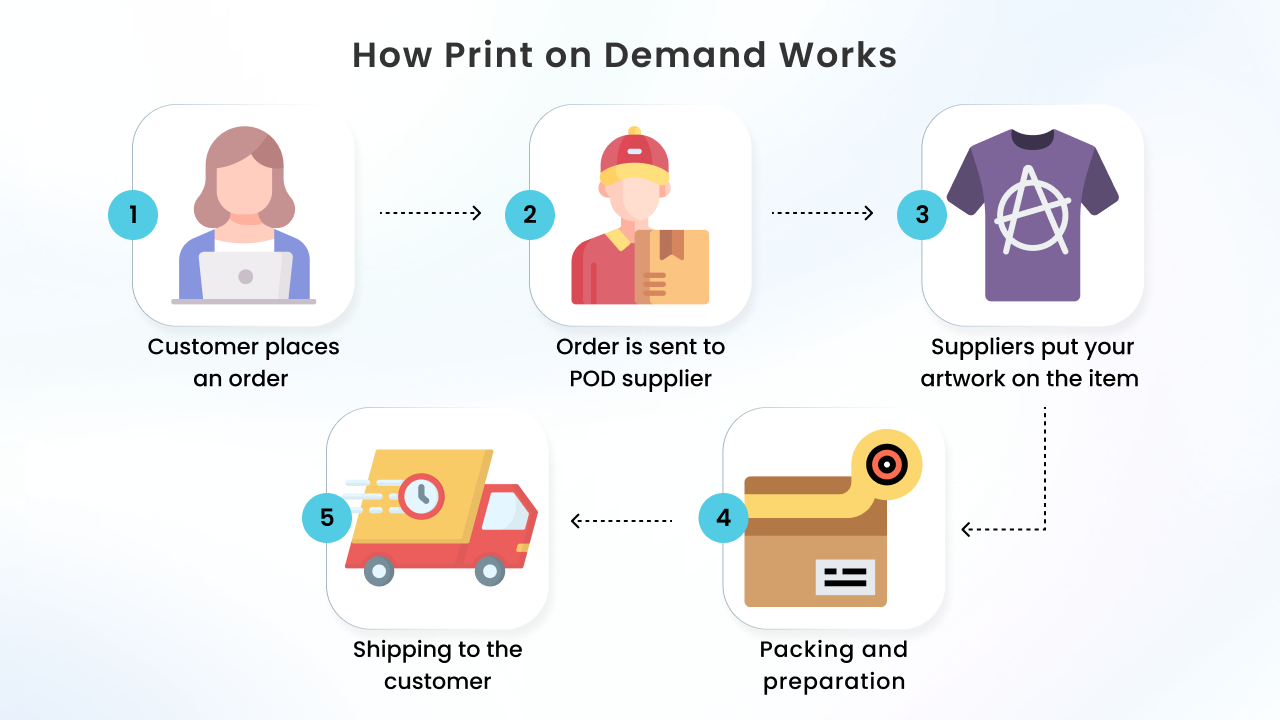
How Print on Demand Works in Practice
You upload your own designs to a print-on-demand platform (Printful, Printrove for the Indian market, Teespring), which are applied to blank products like t-shirts or mugs only after a customer places an order — meaning zero inventory risk, similar to dropshipping, but with fully custom, brand-differentiated products.
Comparing Profit Margins
- Dropshipping margins: Typically 10-30%, since you’re competing on largely commoditised products also available from many other sellers
- Print on demand margins: Often 20-40%+, since custom designs reduce direct price competition and allow for stronger brand positioning
- Both models: Profitability heavily depends on marketing efficiency and customer acquisition cost, not just the base margin
Comparing Product Uniqueness and Brand Building
In the dropshipping vs print on demand comparison, print on demand generally wins on brand differentiation — your designs are genuinely unique, whereas dropshipped products are often sold by dozens of competing stores simultaneously, making price competition and ad costs more intense.
Comparing Shipping Times and Customer Experience
Dropshipping (particularly from overseas suppliers) often involves longer shipping times, sometimes 2-4 weeks, which can hurt customer satisfaction. Print on demand, especially with suppliers manufacturing within India, typically offers faster, more predictable delivery.
Comparing Startup Effort and Skill Requirements
Dropshipping requires strong product research and supplier vetting skills, while print on demand requires either design skills or a budget to commission designs — each model demands a different core competency to succeed.
Which Model Fits Your Situation Better
If you have design skills or access to a designer and want to build a genuine brand, print on demand generally offers better long-term profitability and differentiation. If you want to test market demand quickly across many product categories without design work, dropshipping offers faster experimentation, albeit with thinner margins and more competition.
FAQ
Which is more profitable: dropshipping or print on demand? Print on demand generally offers higher profit margins due to product uniqueness and reduced price competition, though dropshipping can still be profitable with the right niche and marketing strategy.
Do I need design skills to start a print on demand business? Basic design skills help significantly, though you can also commission designs from freelance designers or use simple design tools to get started without advanced expertise.
Is dropshipping still viable in 2026 given increased competition? Yes, though success increasingly depends on finding underserved niches and building genuine brand value rather than simply reselling generic trending products.
How fast is shipping for print on demand orders in India? With India-based print on demand suppliers like Printrove, shipping times are typically much faster than overseas dropshipping, often within a week.
Can I combine dropshipping and print on demand in one store? Yes, some stores successfully combine both models, using dropshipping for testing broad product demand and print on demand for building a differentiated core product line.
What’s the biggest risk with dropshipping compared to print on demand? Dropshipping carries higher risk of supplier quality issues and longer shipping complaints, since you have less control over the product and fulfilment process compared to print on demand.
Conclusion
Neither side of the dropshipping vs print on demand debate is universally better — dropshipping offers faster market testing across many products with thinner margins, while print on demand offers stronger brand differentiation and typically better profitability, provided you have design capability. Consider your available skills, growth goals, and desired level of brand control before choosing which model to build your e-commerce business around.
[link to related guide about reducing cart abandonment here] [link to related guide about small business budgeting here]
Suggested image alt text:
- “print on demand custom t-shirt design mockup”
- “dropshipping product catalog on online store dashboard”
- “entrepreneur comparing dropshipping vs print on demand models”