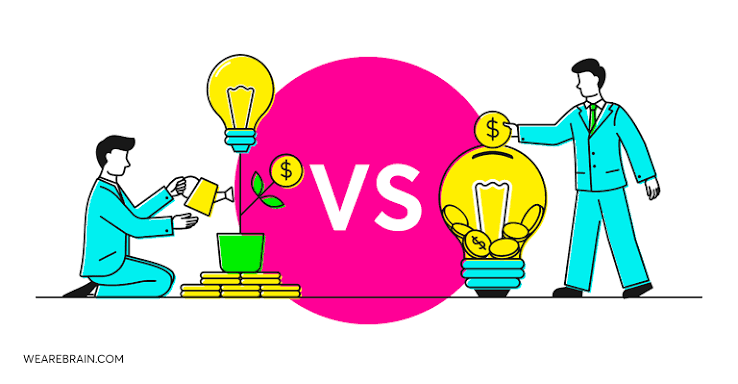
Every founder eventually hits this fork in the road: keep growing slowly on your own money, or chase outside investment to scale fast. The bootstrapping vs venture capital decision shapes almost everything that follows — how much control you keep, how fast you’re expected to grow, and even what kind of hires you can afford.
What Bootstrapping Actually Means
Bootstrapping means funding your startup through personal savings, early revenue, and reinvested profits instead of outside investors — you stay slow-and-steady, but you keep full ownership and decision-making power.
Founders like the team behind Zoho built a multi-billion-dollar company almost entirely bootstrapped, proving it’s not just a “small business” path.
What Venture Capital Brings to the Table
Venture capital (VC) firms invest in exchange for equity, betting that your startup will grow big enough for their stake to multiply in value. In the bootstrapping vs venture capital conversation, VC is really about speed — it lets you hire faster, market aggressively, and out-race competitors in a land-grab market.
Step 1: Assess How Fast Your Market Is Moving
If you’re in a winner-takes-most market (say, a food delivery app or a fintech play), moving slow while bootstrapped can mean a well-funded competitor locks up the market before you. In slower, niche markets, bootstrapping often works just fine.
Step 2: Understand What You’re Giving Up With VC Money
- Equity dilution — you’ll typically give away 15-25% per funding round
- Board seats and reporting obligations to investors
- Pressure to hit aggressive growth targets, sometimes at the cost of profitability
- Expectation of an eventual “exit” (acquisition or IPO)
Step 3: Understand What You’re Giving Up by Bootstrapping
Bootstrapped founders often grow slower, may struggle to match a funded competitor’s marketing spend, and personally shoulder more financial risk. The bootstrapping vs venture capital trade-off isn’t about which is “better” — it’s about which risk profile matches your goals.
Step 4: Calculate Your Real Runway
Before deciding, work out exactly how many months your current savings or revenue can sustain the business. A rough rule many Indian founders use: if you can’t survive 6 months without new funding and your market is competitive, VC conversations are worth starting now rather than later.
Step 5: Consider the Hybrid Path
Many successful startups don’t pick one extreme. They bootstrap to prove the model, then raise a smaller, more strategic VC round once they have leverage — meaning better valuation and less dilution than raising blind on day one.
A Quick Comparison
- Speed to scale: VC wins, hands down
- Ownership retained: Bootstrapping wins
- Pressure and reporting: Bootstrapping is far lighter
- Access to networks and mentorship: VC often wins, especially with top-tier firms
- Risk if the idea fails: Bootstrapped founders absorb it personally; VC spreads risk across investors
FAQ
Is bootstrapping better than raising venture capital? Neither is universally better — bootstrapping suits steady, profitable niches, while VC suits fast-scaling markets where speed matters more than ownership.
Can a bootstrapped startup raise VC funding later? Yes, and many do — proving traction while bootstrapped often gets founders a better valuation when they eventually raise.
How much equity do VCs typically ask for in an early round? Seed rounds in India commonly range from 10% to 25% equity, depending on valuation and how much capital is raised.
What industries are best suited to bootstrapping? Service businesses, SaaS tools with low infrastructure costs, and niche e-commerce brands are often easier to bootstrap than capital-heavy sectors like deep tech or hardware.
Do I need a big idea to attract venture capital? VCs generally look for large addressable markets and high growth potential, so ideas need to show a path to significant scale, not just profitability.
What’s a safe amount of personal savings to bootstrap with? Most advisors suggest having at least 6-12 months of personal and basic business expenses saved before going all-in on bootstrapping.
Conclusion
The bootstrapping vs venture capital decision comes down to speed versus control. If your market rewards being first and biggest, outside capital might be the only realistic path. If you’re building something that can grow steadily and profitably without a land-grab dynamic, bootstrapping keeps the company — and the decisions — entirely yours. Whichever path you choose, revisit the decision every 12-18 months, because the right funding strategy today isn’t always the right one two years from now.
[link to related guide about how to pitch investors here] [link to related guide about startup financial planning here]
Suggested image alt text:
- “founder comparing bootstrapping vs venture capital funding options”
- “startup team discussing investment strategy in meeting room”
- “hand drawn chart comparing equity dilution across funding rounds”