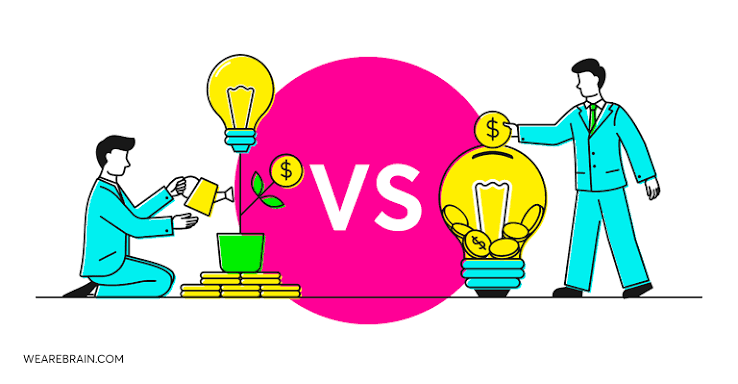
Most first-time founders overbuild. They spend six months and their entire savings perfecting an app before a single real customer has used it. A minimum viable product flips that approach — you build the smallest possible version that solves the core problem, test it with real users, and only invest more once you know people actually want it.
What Counts as a True Minimum Viable Product
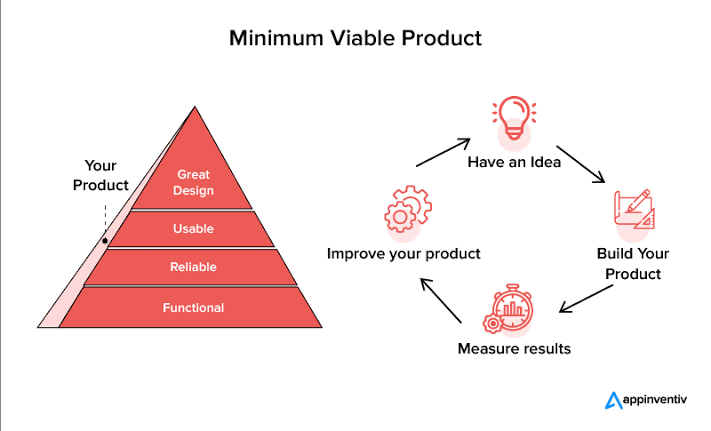
A minimum viable product is the simplest version of your idea that lets real users experience its core value — nothing more. It’s not a “buggy full product,” it’s a deliberately limited one designed to generate learning, not perfection.
Airbnb’s first version was literally the founders renting out air mattresses in their own apartment and manually managing bookings — no app required.
Step 1: Define the One Core Problem You’re Solving
Before writing a line of code, write down the single problem your minimum viable product must solve. If your list has five “must-have” features, cut it down to one. Everything else can wait for version two.
Step 2: Choose the Cheapest Format That Proves the Concept
- A landing page with a “Notify Me” button to test demand before building anything
- A WhatsApp-based or manual service to test if people will pay, before automating
- A no-code tool (Glide, Bubble, Google Forms + Sheets) instead of custom development
- A simple spreadsheet-backed prototype for internal business tools
Step 3: Set a Hard Budget and Timeline
Give yourself a real constraint — say ₹25,000 and three weeks. Constraints force smarter decisions and stop scope creep, which is the single biggest reason budget MVPs turn into six-month, half-finished projects.
Step 4: Use No-Code and Low-Code Tools Where Possible
You don’t need a developer for version one. Tools like Bubble, Glide, Adalo, or even a well-organised Notion page can simulate most of what a minimum viable product needs to prove demand, at a fraction of custom development cost.
Step 5: Get It in Front of Real Users Fast
A perfect MVP that nobody has tested is worthless. Share it with 20-30 people who match your target customer, not just friends and family who’ll be polite instead of honest.
Step 6: Measure the Right Signals
Don’t just ask “did you like it?” — track whether people actually complete the core action (sign up, pay, use it a second time). Real behaviour tells you far more than verbal feedback.
Step 7: Decide What to Build Next Based on Data, Not Opinions
Once you have usage data, prioritise the next features based on what users are actually asking for or struggling with — not based on what feels exciting to build.
FAQ
How much should a minimum viable product cost to build? For a service or simple digital product, many founders in India build a functional MVP for anywhere between ₹10,000 and ₹1,00,000 using no-code tools, well below custom app development costs.
Do I need a developer to build an MVP? Not necessarily — no-code and low-code platforms let non-technical founders build and test functional MVPs before hiring developers.
How long should it take to build a minimum viable product? Most lean MVPs should take between 2 and 6 weeks; if it’s taking months, the scope is likely too broad.
What’s the difference between a prototype and an MVP? A prototype demonstrates how something might work, often without real functionality, while an MVP is a working product that real users can actually use.
How many users do I need to validate an MVP? A few dozen engaged users giving honest feedback is usually more valuable than hundreds of passive sign-ups.
Should I charge money for my MVP from day one? If possible, yes — even a small price validates real demand far better than free usage, which can create misleadingly positive signals.
Conclusion
Building a minimum viable product on a tight budget isn’t a compromise — it’s actually the smarter path even for well-funded founders. By focusing on one core problem, using no-code tools, and getting real user feedback fast, you avoid the classic trap of building something nobody wants. Start small, launch quickly, and let real usage data — not assumptions — decide what you build next.
[link to related guide about no-code tools for startups here] [link to related guide about startup budgeting basics here]
Suggested image alt text:
- “founder sketching minimum viable product wireframe on whiteboard”
- “no-code app builder interface on laptop screen”
- “small startup team reviewing user feedback data”