
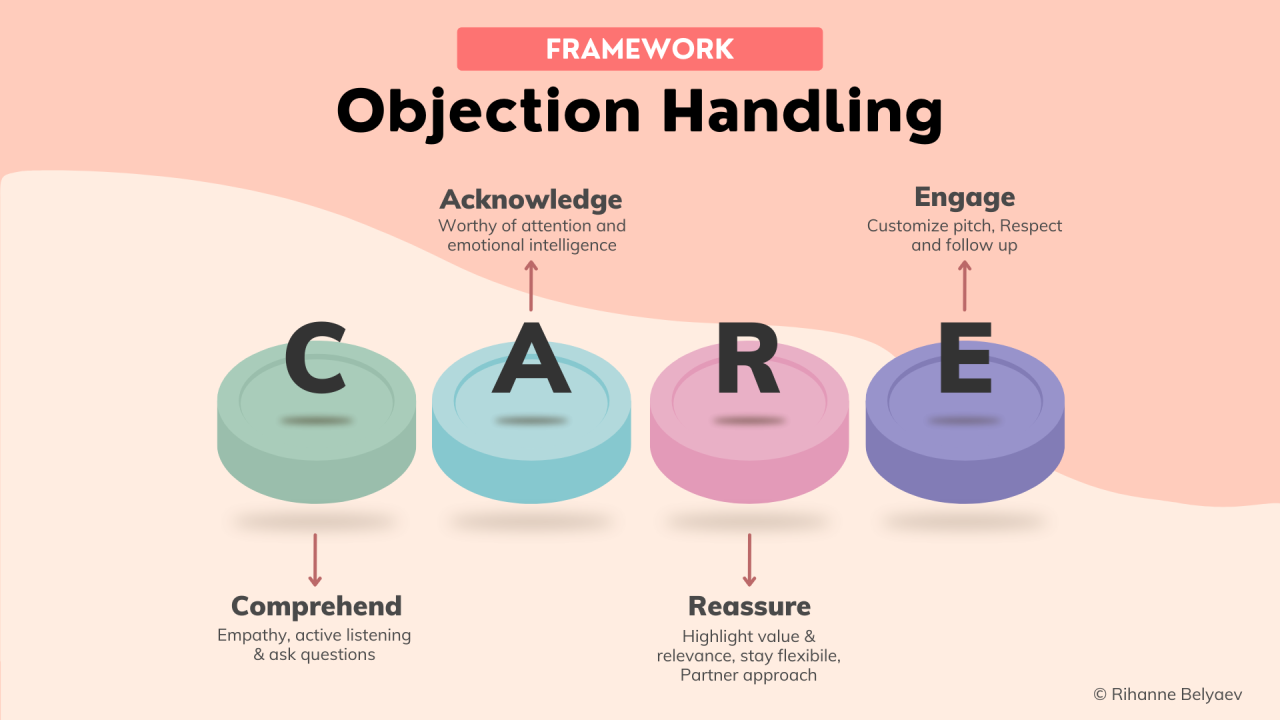
Every salesperson dreads the moment a promising conversation hits an objection — “it’s too expensive,” “we need to think about it,” “we’re already using someone else.” How you handle sales objections in that moment often determines whether the deal dies right there or moves forward, and the difference usually comes down to technique, not luck.
Why Objections Aren’t Actually Rejections
Most objections aren’t a hard “no” — they’re a request for more information or reassurance before committing. Learning to handle sales objections as a normal, expected part of the buying process (rather than a sign you’ve failed) fundamentally changes how you respond to them.
Step 1: Listen Fully Before Responding
The instinct to immediately counter an objection often backfires. Let the prospect finish completely, and consider repeating it back briefly (“So the main concern is the implementation timeline?”) to confirm you understand before responding.
Step 2: Acknowledge Before You Counter
Jumping straight into a rebuttal makes prospects feel unheard and defensive. A brief acknowledgment — “That’s a fair concern, a lot of our current clients asked the same thing initially” — lowers resistance before you address the substance.
Step 3: Ask Clarifying Questions
- “When you say it’s too expensive, compared to what specifically?”
- “What would need to be true for the timeline to work for you?”
- “Is this the main concern, or are there other factors too?”
These questions often reveal the real underlying objection, which is sometimes different from what was initially stated.
Step 4: Use Evidence, Not Just Reassurance
Generic reassurance (“don’t worry, it’ll be fine”) rarely convinces skeptical buyers. Specific case studies, data points, or client testimonials relevant to their exact objection carry far more weight when you handle sales objections.
Step 5: Address the Price Objection With Value Framing
When price comes up, resist the urge to immediately discount. Instead, reconnect the conversation to the specific value or ROI already discussed earlier — price objections are often really value objections in disguise.
Step 6: Know When to Let an Objection Go
Not every objection needs to be “won” in the moment. Sometimes acknowledging it honestly and moving forward with a smaller next step (a trial, a smaller initial order) works better than pushing hard for full commitment immediately.
Common Objections and Reframing Approaches
- “We’re happy with our current vendor” — ask what would make them consider a change, rather than attacking the competitor directly
- “I need to check with my team” — offer to join that internal conversation or provide materials that make their internal pitch easier
- “Not the right time” — ask what timeline would work better, and set a specific follow-up rather than a vague “check back later”
FAQ
What’s the most common sales objection salespeople face? Price-related objections are among the most common, though they often mask an underlying uncertainty about value rather than being purely about cost.
How do I handle a sales objection without sounding pushy? Acknowledging the concern genuinely before responding, and asking clarifying questions instead of immediately countering, keeps the conversation collaborative rather than confrontational.
Should I always try to overcome every objection? No — sometimes an objection reflects a genuine mismatch, and recognising that early saves both parties time compared to forcing a deal that isn’t a good fit.
How can I prepare for objections before a sales call? Reviewing common objections specific to your industry and preparing evidence-based responses (case studies, data) in advance makes real-time handling far smoother.
Is it okay to offer a discount when facing a price objection? Discounting should generally come after reinforcing value, not as a first response — leading with a discount can undermine perceived value and set a difficult precedent.
How do top salespeople handle repeated objections from the same prospect? They typically dig deeper to uncover the real underlying concern rather than repeatedly countering the surface-level objection, which is often a symptom of a deeper hesitation.
Conclusion
Learning to handle sales objections well is less about clever rebuttals and more about genuine listening, thoughtful questions, and evidence-based responses. Treat objections as a normal, even useful, part of the sales process — they often reveal exactly what a prospect needs reassurance about before they’re ready to commit. Master this skill, and objections stop feeling like roadblocks and start feeling like the natural next step toward closing the deal.
[link to related guide about cold calling scripts here] [link to related guide about building customer trust in marketing here]
Suggested image alt text:
- “salesperson calmly addressing client objection in meeting”
- “sales team discussing objection handling techniques”
- “salesperson presenting case study to overcome price objection”