
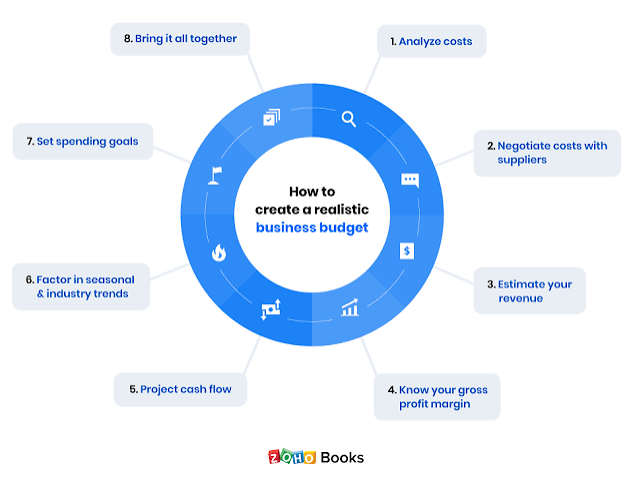
Many small business owners avoid budgeting because it sounds like a complicated finance exercise reserved for big companies with accounting teams. In reality, a simple small business budget can be built in an afternoon with a basic spreadsheet, and it’s one of the highest-leverage habits for staying financially healthy and making confident growth decisions.
Why Small Businesses Need a Budget Even Without Complex Finances
A small business budget matters because it turns vague financial awareness (“business feels okay”) into specific, actionable numbers — knowing exactly how much you can spend on marketing, when cash flow gets tight seasonally, and whether a new hire is genuinely affordable, rather than guessing.
Step 1: List All Fixed Monthly Expenses
Start with predictable, recurring costs — rent, salaries, software subscriptions, loan repayments. These form the baseline your business needs to cover every single month regardless of revenue fluctuations.
Step 2: Estimate Variable Expenses
- Raw materials or inventory costs, which typically scale with sales volume
- Marketing and advertising spend, which you can adjust based on cash flow
- Utility costs and other expenses that fluctuate month to month
Track these for a few months if you haven’t already, to get a realistic average rather than guessing.
Step 3: Project Realistic Revenue
Base revenue projections on actual historical data where available, rather than optimistic hopes. If you’re a new business without history, research industry benchmarks and build a conservative estimate you can revise as real data comes in.
Step 4: Build In a Buffer for Irregular Expenses
Every small business budget should include a buffer for unexpected costs — equipment repairs, a sudden compliance fee, an unplanned opportunity. Many advisors suggest budgeting 5-10% of monthly revenue as a contingency buffer.
Step 5: Separate Personal and Business Budgets Clearly
This connects directly to broader financial health — a small business budget only works if it’s genuinely separate from personal spending, with a clear, consistent owner’s draw or salary rather than pulling money as needed.
Step 6: Review and Adjust Monthly, Not Just Annually
A budget set once a year and forgotten quickly becomes disconnected from reality. Reviewing actual spending against your budget monthly lets you catch problems early and adjust for seasonal patterns or unexpected changes.
Step 7: Use Budgeting Tools That Match Your Complexity
A simple spreadsheet is genuinely sufficient for many small businesses just starting out, while growing businesses with more transactions benefit from dedicated tools like Zoho Books or QuickBooks that automate much of the tracking.
Sample Simple Budget Categories
- Fixed costs (rent, salaries, subscriptions)
- Variable costs (inventory, materials, utilities)
- Marketing and growth investment
- Tax reserve (setting aside a percentage of revenue)
- Contingency buffer
- Owner’s draw or salary
FAQ
Do very small businesses or solo entrepreneurs really need a formal budget? Yes — even solo entrepreneurs benefit significantly from a simple budget, since it prevents the common problem of spending inconsistently without a clear sense of what the business can actually afford.
What’s the easiest way to start budgeting for a small business with no prior financial tracking? Start by tracking actual expenses and revenue for one to two months using a simple spreadsheet, then use that real data to build your first proper budget rather than guessing from scratch.
How much should a small business set aside for taxes in its budget? This varies by business structure and income level, but many advisors suggest starting with a general estimate of 20-30% of net income as a placeholder, refined with professional guidance.
Should marketing spend be a fixed or variable budget category? Marketing is often best treated as a semi-flexible category — with a baseline minimum spend, but room to increase during high-cash-flow periods or scale back during tighter months.
How often should a small business budget be updated? Monthly reviews against actual spending are ideal, with a more thorough annual review to reset projections based on the previous year’s real performance.
What tools can help small businesses create and manage a budget? Simple spreadsheets work well for very small operations, while tools like Zoho Books, QuickBooks, or even dedicated budgeting apps help as transaction volume and complexity grow.
Conclusion
A working small business budget doesn’t need to be complicated to be effective — it needs to be realistic, consistently updated, and genuinely used to guide actual spending decisions rather than created once and forgotten. Start with a simple spreadsheet covering fixed costs, variable costs, and a contingency buffer, review it monthly against real numbers, and let it become the tool that turns financial guesswork into confident, informed business decisions.
[link to related guide about small business grants here] [link to related guide about bookkeeping mistakes to avoid here]
Suggested image alt text:
- “small business owner reviewing monthly budget spreadsheet”
- “budget categories chart for small business finances”
- “entrepreneur tracking business expenses on laptop”